
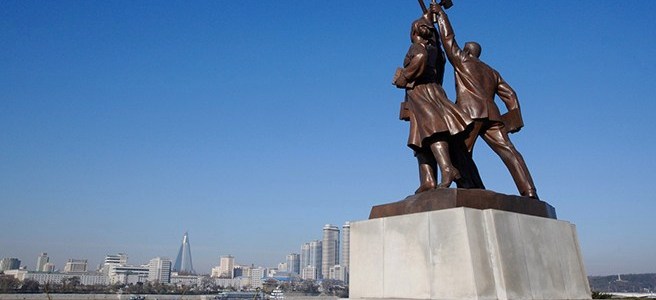
I just returned from visiting my 32nd country on a trip to East Africa. But on occasion I find myself going places that were not on my travel list. For instance, recently I was asked to go on a work trip to North Korea.
How could I say no? North Korea! I know about 5 people total who have been there.
I was a bit uneasy with the idea at first, but I educated myself on what not to discuss, and since I was a visitor, I understood I needed to respect their ways and beliefs. Wouldn’t I expect the same respect of someone visiting my home country?
I know that even the mention of North Korea is political, but I want to leave that aside.
Our visas were processed in China via the Swedish embassy. You don’t get a stamp in your passport, just a slip of paper that they take back when you leave.
On arrival, we had to give them our phones, but they were returned within minutes. We also needed to declare what kind of digital devices, books, and magazines we had. They gave a brief look at my cameras, and a running magazine, but waved them off. My colleague’s computer was checked for movies, but then we were let through.
It was much less dramatic than I expected.
We were the only group at our large guesthouse, more of a guest mansion really. Just eight of us, three colleagues, me, our two minders, and our two drivers.
It snowed the first night we were there, and the ladies who worked at the guesthouse were out shoveling the driveway before it was light outside. Several were wearing heels. As we reached the main highway, entire communities were out shoveling. Well, really they were using wooden boards to scrape the snow away. I’d never seen anything like it.
I was not allowed to photograph my favorite sight: young boys playing on the frozen patchwork of rice paddies and irrigation canals. They had fashioned wood ‘uni-skates’- a flat board for their feet to rest on, then a narrow ‘blade’ made of wood attached below the board. They squatted down on the skate, and propelled themselves across the ice with long sticks, acting as ‘ski poles’. I was so happy to see children having some fun.
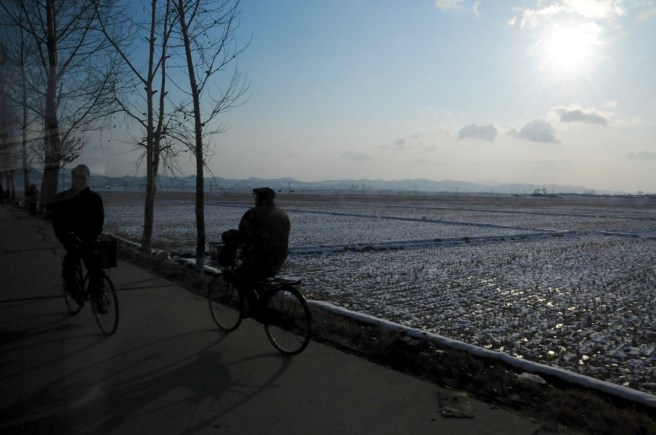
The UN estimates that there are about 25 million people in the country. They work so hard. Their faces show it, weary and tanned. They walk or bike everywhere. There were very few cars.
I saw a live pig being pushed up a hill, strapped to the back rack of a bicycle. If you have to move your pig, I guess you find creative ways to do it.
All the food is supplied in the form of rations, but most rural households also had small kitchen gardens. As I was there in the middle of winter, all that seemed to grow was cabbage. Cabbage was everywhere, really the only spot of color in a drab, gray and brown landscape. It was draped across fences to dry and ferment into kimchi.
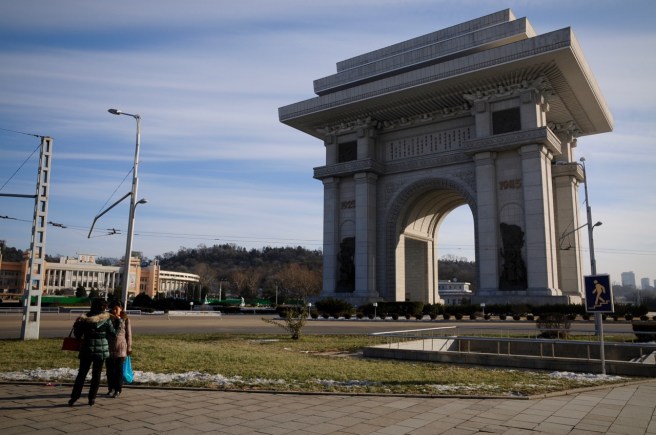
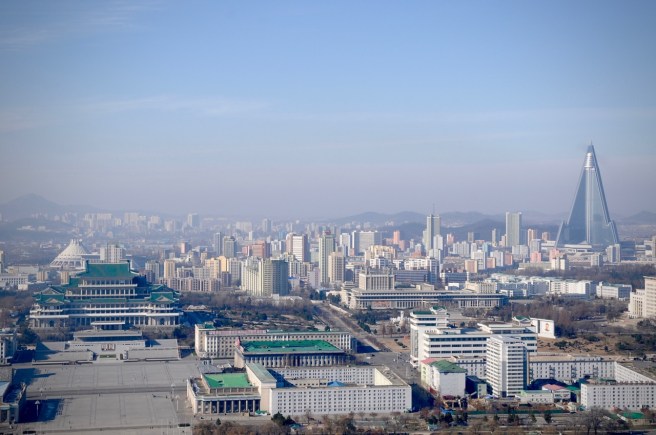
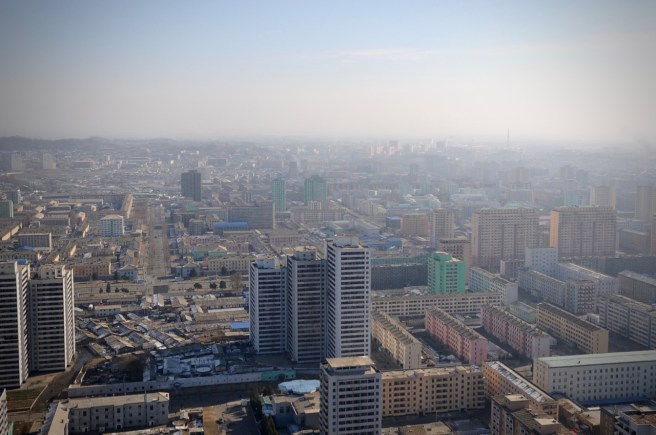
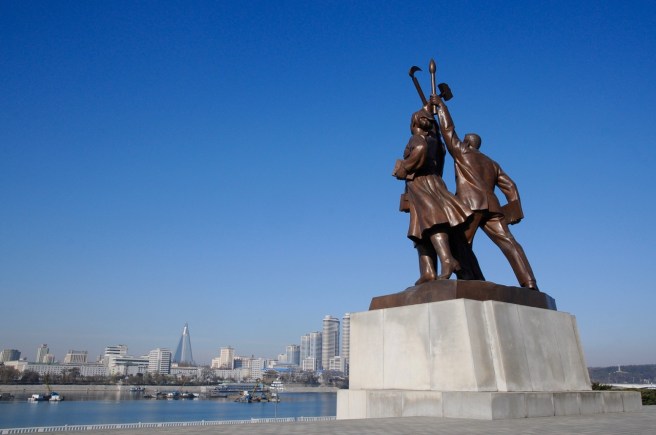
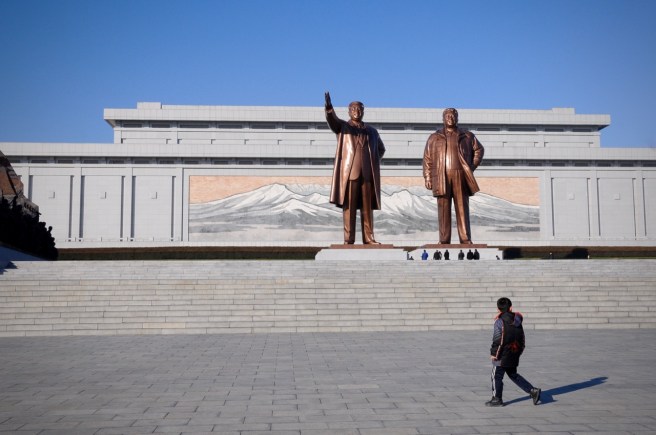
Back in the capital, I was quite free to photograph what I wanted – it was their showcase – modern buildings, monuments, and pristine roads. They sure know how to do grand monuments.
Leaving the country was strangely just as easy as arrival – they wanted to make sure that whatever we brought into the country was also taken out. I’ll admit there was a little paranoia, that something I had said or done would get me locked up, but apparently I was model visitor and they let me through customs. Sweet relief.



 rumpledluggagetag.com
🙂 Love seeing this!
Such great descriptions – I could imagine the boys on the frozen rice fields and their wooden skates