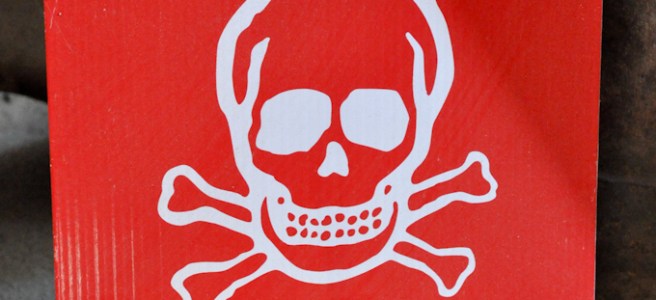
I felt shame.
I usually laugh off American jokes and generalizations, some of them are probably deserved, but recently I wanted to duck away and hide.
Walking through the COPE visitor center in Vientiane, I saw the legacy of the Vietnam War in Laos.
In 1997, the COPE center opened to provide physical rehabilitation and prosthetic devices for people who have been maimed by UXO.
UXO aka unexploded ordinance aka bombs – leftovers from the aerial bombing runs that took place during the war.
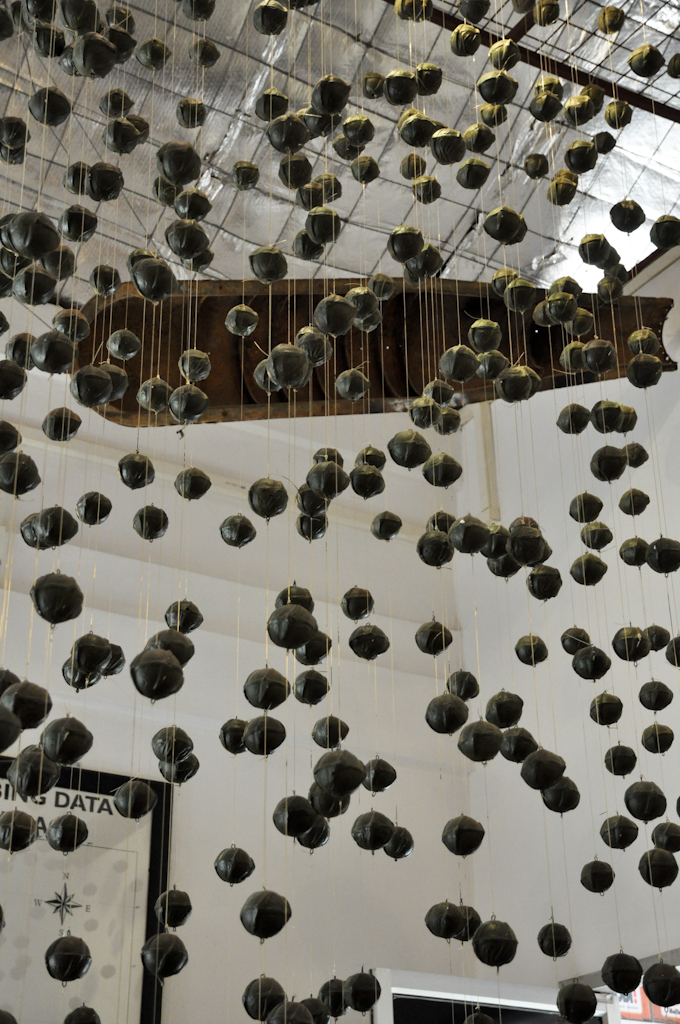
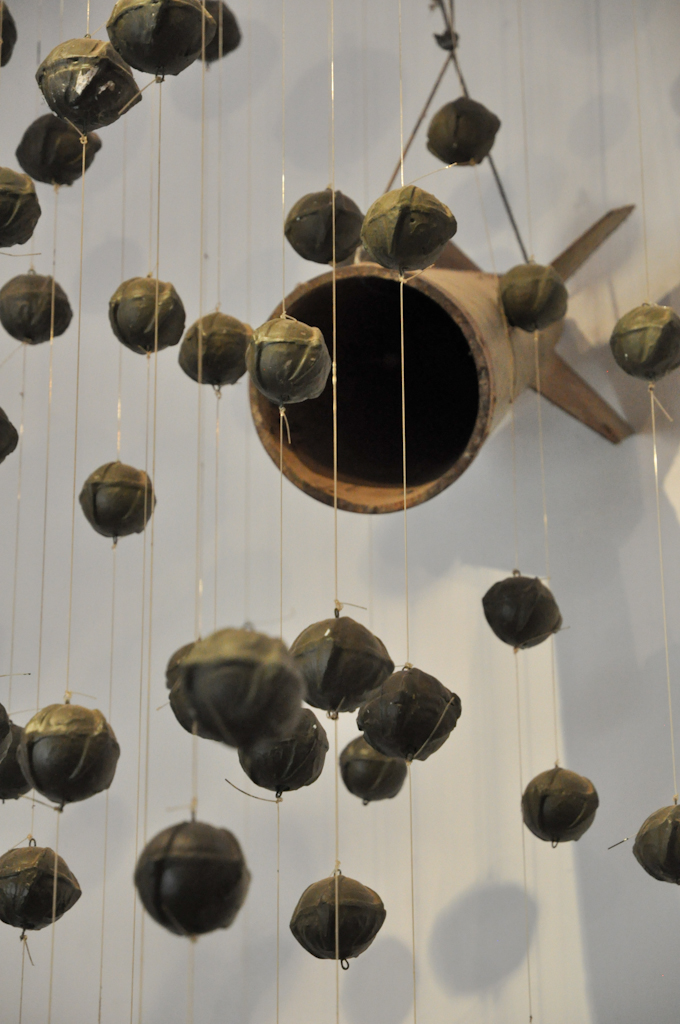
Informative and sobering, the visitor center reveals the continuing effects of UXO on the country. People are still dying from bombs that were dropped 40 years ago.
Some statistics:
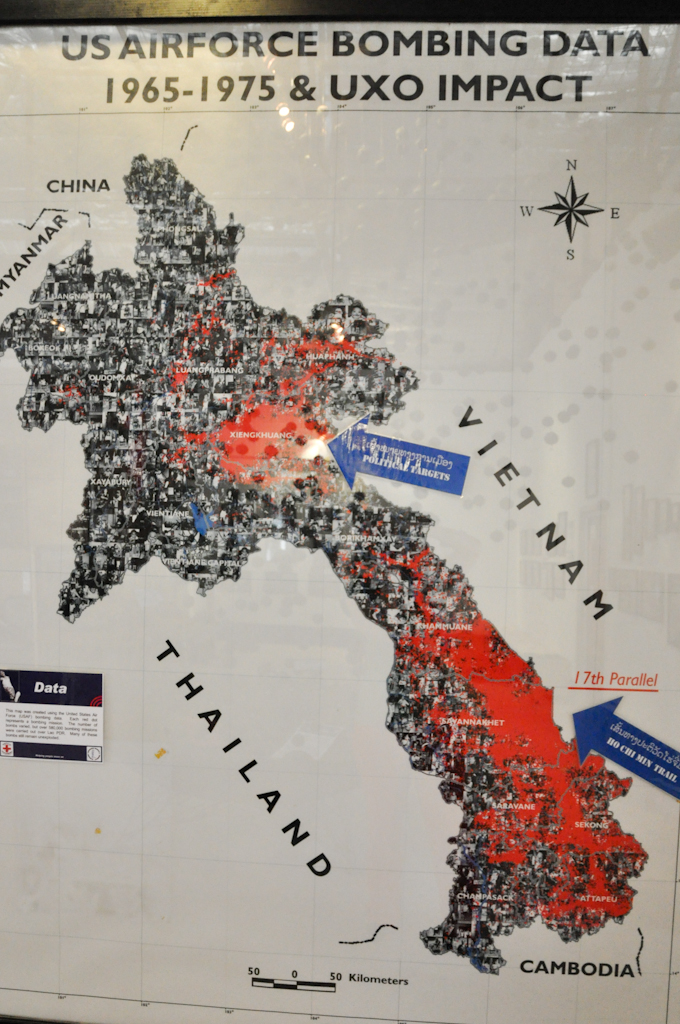
- There were more than 580,000 bombing missions on Laos from 1964 to 1973 during the Vietnam War. That’s equivalent to one bombing mission every eight minutes, 24 hours a day, for nine years.
- The bombings were focused along the border with Vietnam- in an effort to prohibit movement along the Ho Chi Minh Trail, among other goals.
- Over two million tons of ordnance was dropped on the country, with up to 30% failing to explode as designed, leaving Laos contaminated with vast quantities of UXO.
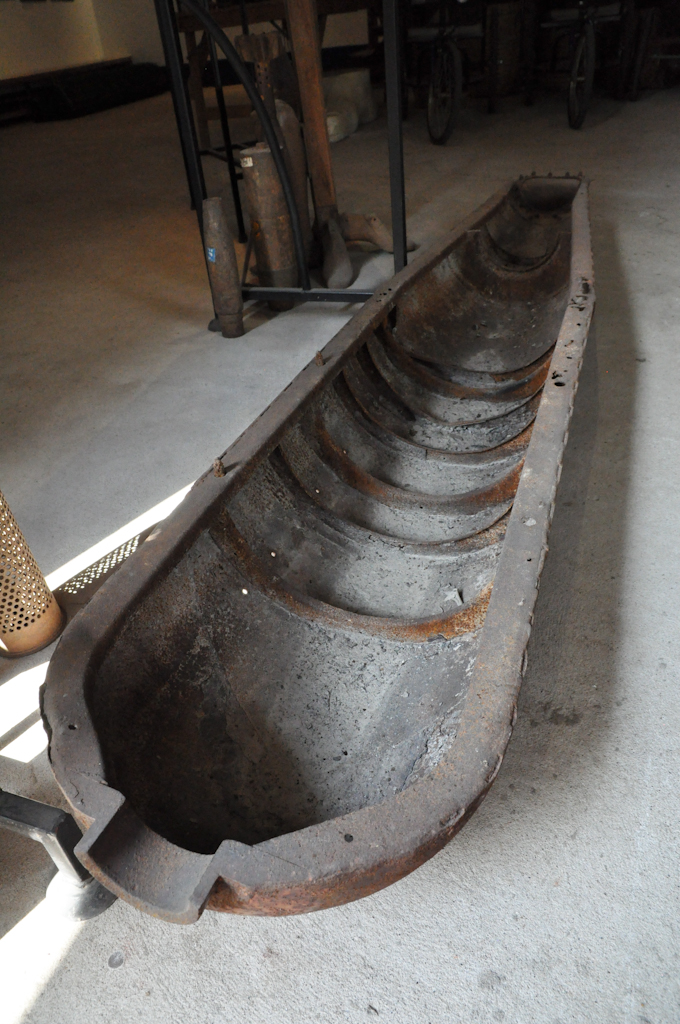
During the war, military planes dropped cluster bombs which are about 5 feet long. Each one is filled with bombies – imagine tennis-sized balls – each an individual bomb. The clusters bombs were meant to explode- spreading the little bombs across a wide area.
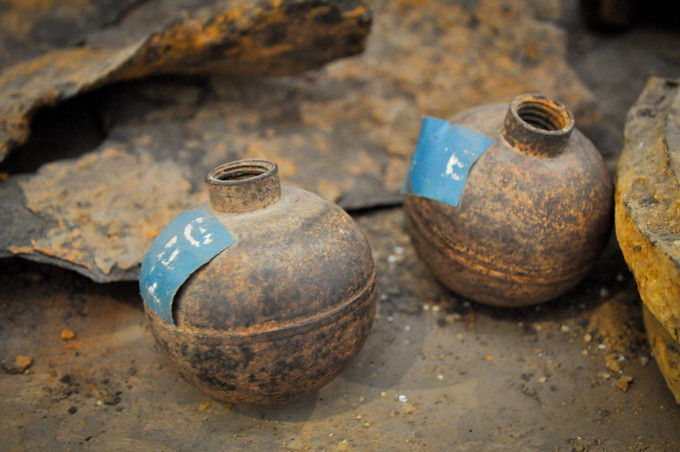
These bombies are the perfect size for small hands.
In 2012, a child in eastern Laos lost his leg. A neighbor boy had found the bombie. Together with some other friends, they tried to pry it open to see what was inside.
His brother and three other children died. Three other people were injured. He has received help with his rehabilitation, and he’s doing well now- even running around with neighbors playing soccer wearing his prosthetic leg.
Solutions?
The clean-up is tedious and obviously dangerous work. Bombs are identified, after that; experts determine how to dispose of them. Can they move it or does it need to be detonated where it is? Then they have to clear the area, disrupting the community. They’ve even found the bombs in the middle of school yards!
Laos is on the UN list of Least Developed Countries. I imagine they have a long way to go before they can handle this clean-up on their own.
I’m not sure what the solutions are, but here are my ideas:
- In 2012, when Hilary was Secretary of State, she visited Laos and the COPE center. As a result, U.S. funding went up from around $3 million per year, to $9 million a year for assistance with bomb clearance- at least it was designated by Congress.
- What if the U.S. could share all their bomb-clearance specialists who have been working in Iraq and Afghanistan to help clear the land and train local people to do the same.
- Ask your Congressional representatives to care and offer additional funding to clean up the mess and to sign the ban on cluster munitions.
- Support organizations that are doing great work here with the clearance of UXOs or creating educational tools for communities- especially for children- that tell you what to do if you find a bomb.
We can’t change what’s already happened, but we can choose to do the right thing now.
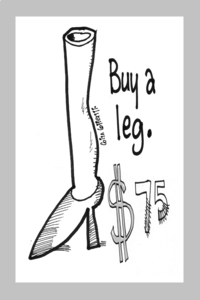
Today, the COPE center has expanded their services to many people with physical disabilities. When I was there last year, I bought a leg. $75 USD will buy a patient a prosthetic leg.
I actually bought someone a leg! No shame in that. They give you this little card when you make a donation. A friend of mine said the card should not read, “Buy a leg.” It should read, “Buy a leg!!!!!!”
Notes:
*Photos taken inside the COPE center- if you come to Laos, a visit is a must
*Lao PDR story reporting provided by World Vision
Sources and for more information:
 rumpledluggagetag.com