One of my favorite experiences from my trip was a natural dyeing and weaving class at Ock Pop Tok (East Meets West) in Luang Prabang. The center seeks to keep the traditions of weaving alive and provide the women with a fair trade price for their art.
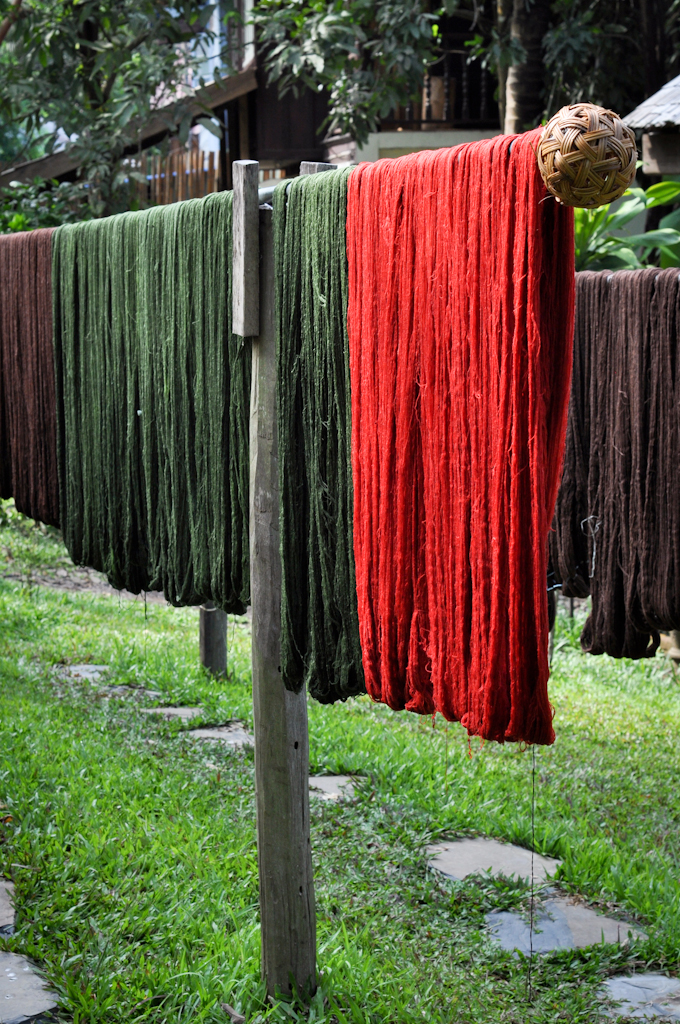
I didn’t know about the long history of weaving in Laos. Arriving at the center via tuk-tuk, I was greeted with rows and rows of silk drying in the sun on wooden stands.
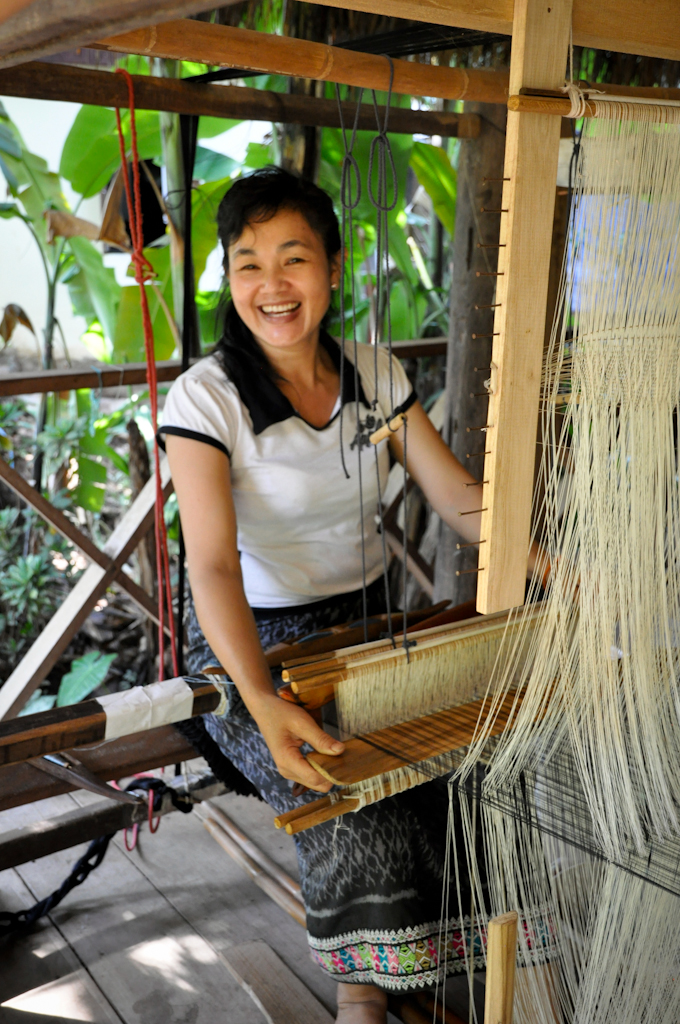
Women artisans were working the looms, creating one of a kind silk scarves or blankets. The colors were amazing! Artists!! My people!! Their hands flew through the looms. The forms were webbed with intricate designs- some traditional, some modern.
I was lucky that I came during the off-season because there were just two of us in the dyeing class, then just me for the weaving class!
The first lesson: where does silk come from. They were kind enough to have a little video clip to show us the process. Eww. Imagine a big pot full of water with jumping, wriggly cocoons as the worms were boiled alive. I guess the silver lining is they often eat the worms post-boiling, a good source of protein.
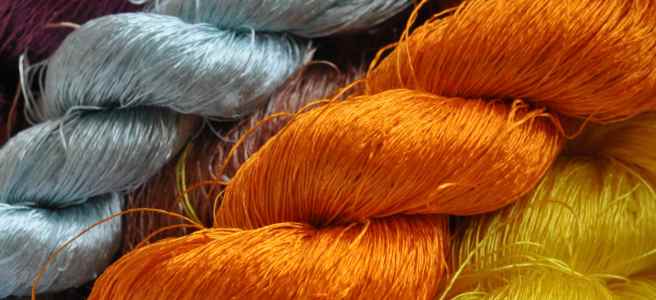
The second lesson: natural dyes. All the materials came from organic sources found on the grounds like roots, seeds, grasses, fruits, and spices. My classmate, a Korean woman, and I each selected three colors that we wanted to create. I chose a limey green, bright orange and a soft linen brown.
Then our teacher was like, okay, let’s dig! We dug up beet roots – they looked like huge, round yams – which were growing underneath the weaving hut. Then I harvested a few handfuls of lemongrass. Finally, the best part was harvesting annatto seeds from the tree next to the dyeing hut. My instructor handed me a 10′ long bamboo tube with a notch carved into the end. I put the notch up around a group of seed pods at the top of the tree and twisted – off it fell. The annatto seeds are what they use to dye the monks garments in Laos – a beautiful, bright orange.
We added our roots and grasses to several small pots of boiling water atop a wood-fired stove. The professionals working next door used huge cast iron vats for their dyeing- that day was purple day. After dropping my thread into the various pots, it only soaked for a few minutes and was done. I rinsed each strand with water then hung it to dry.


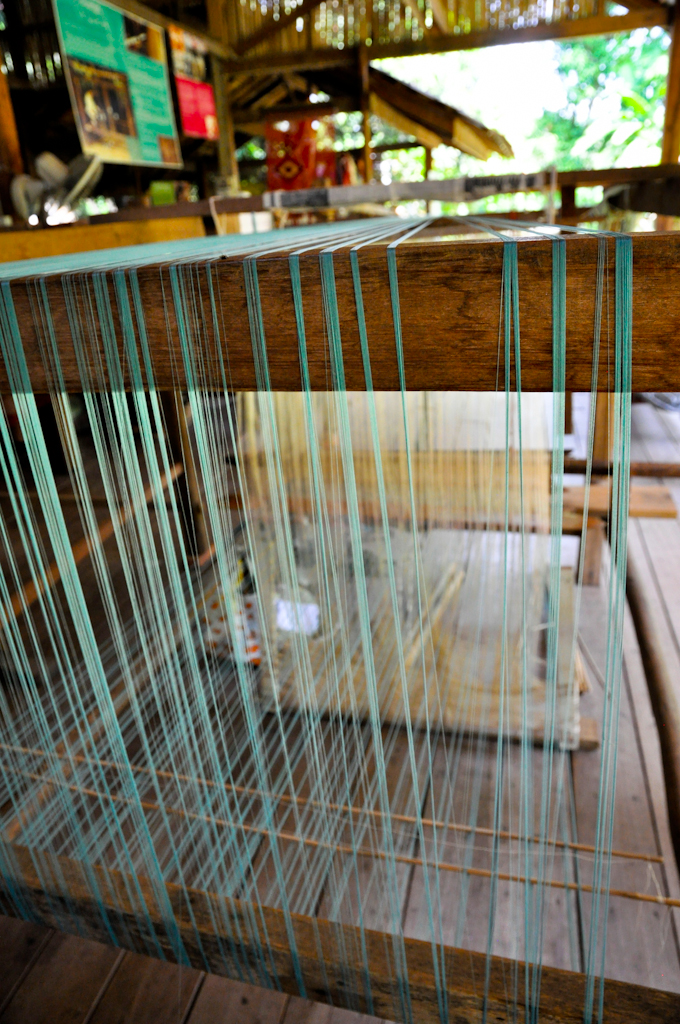
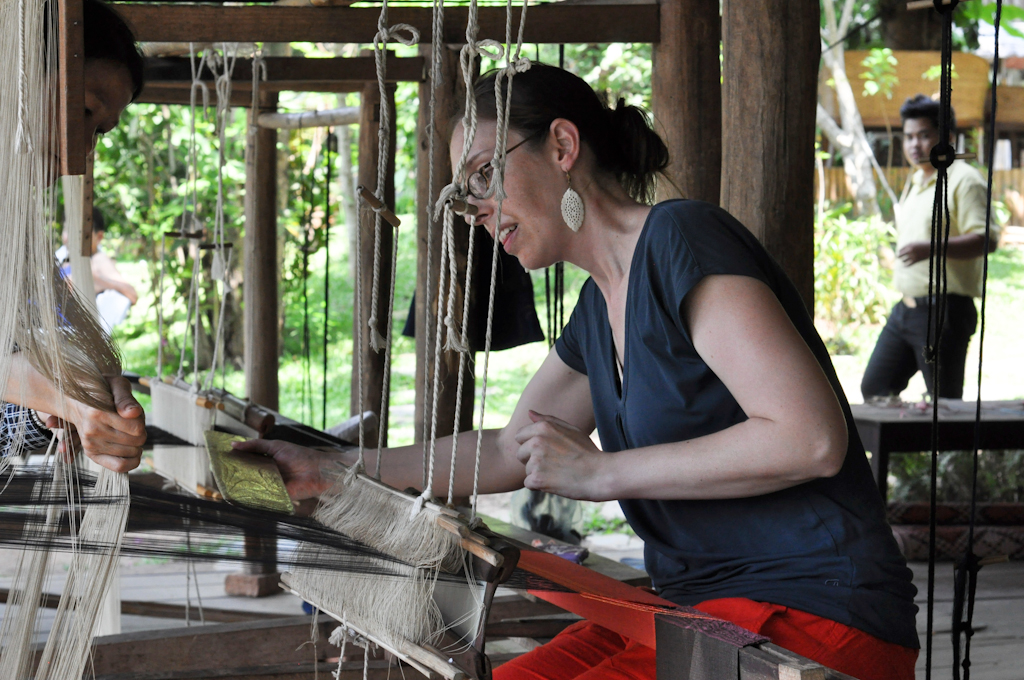
In the afternoon, one of the professional weavers set-up the loom for me. I had to seriously focus to make sure the shuttle was going through to the right place – foot pedal, shuttle, smack the threads tight with a thick, wooden rod.
I had 3 staff watching me at all times, including my tuk-tuk driver who must have been watching for the entertainment factor. I’m sure they were just itching to yank the wooden shuttle out of my hands, “No, like this!!” I was SO slow!! I think what I did in 4 hours they could have done in about 45 minutes! It was a very surreal moment- looking out on the Mekong River from my loom. So cool.

 rumpledluggagetag.com